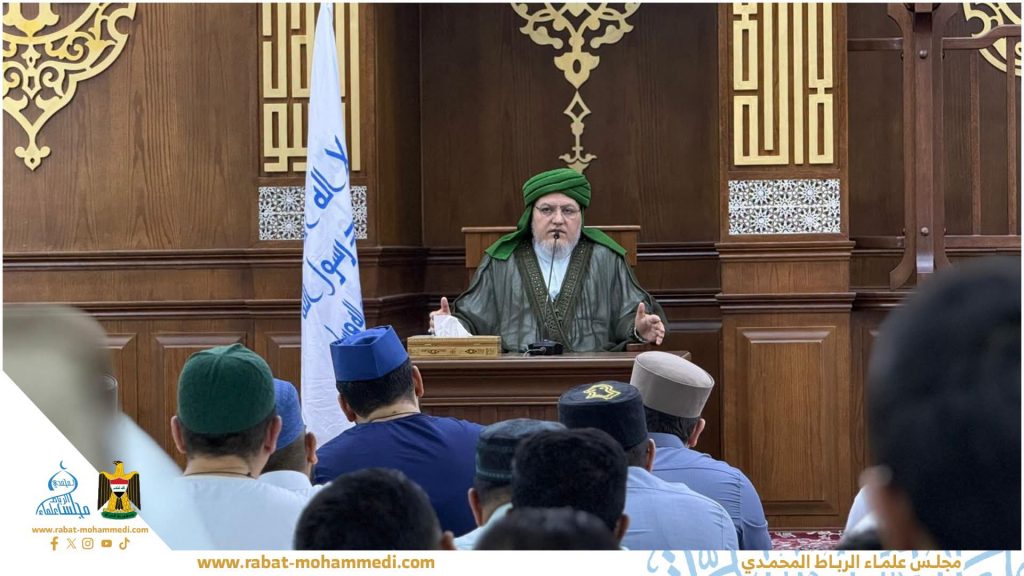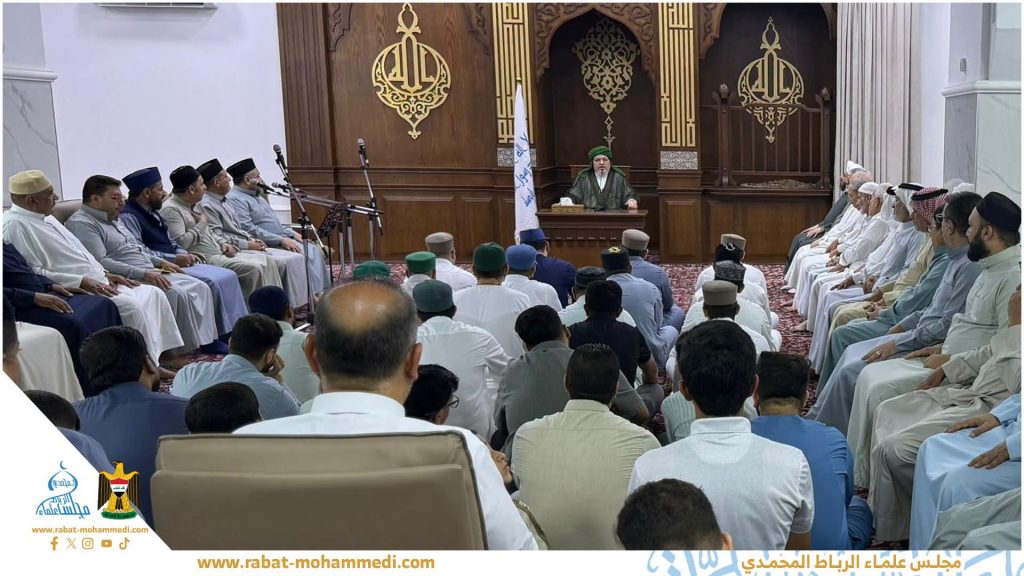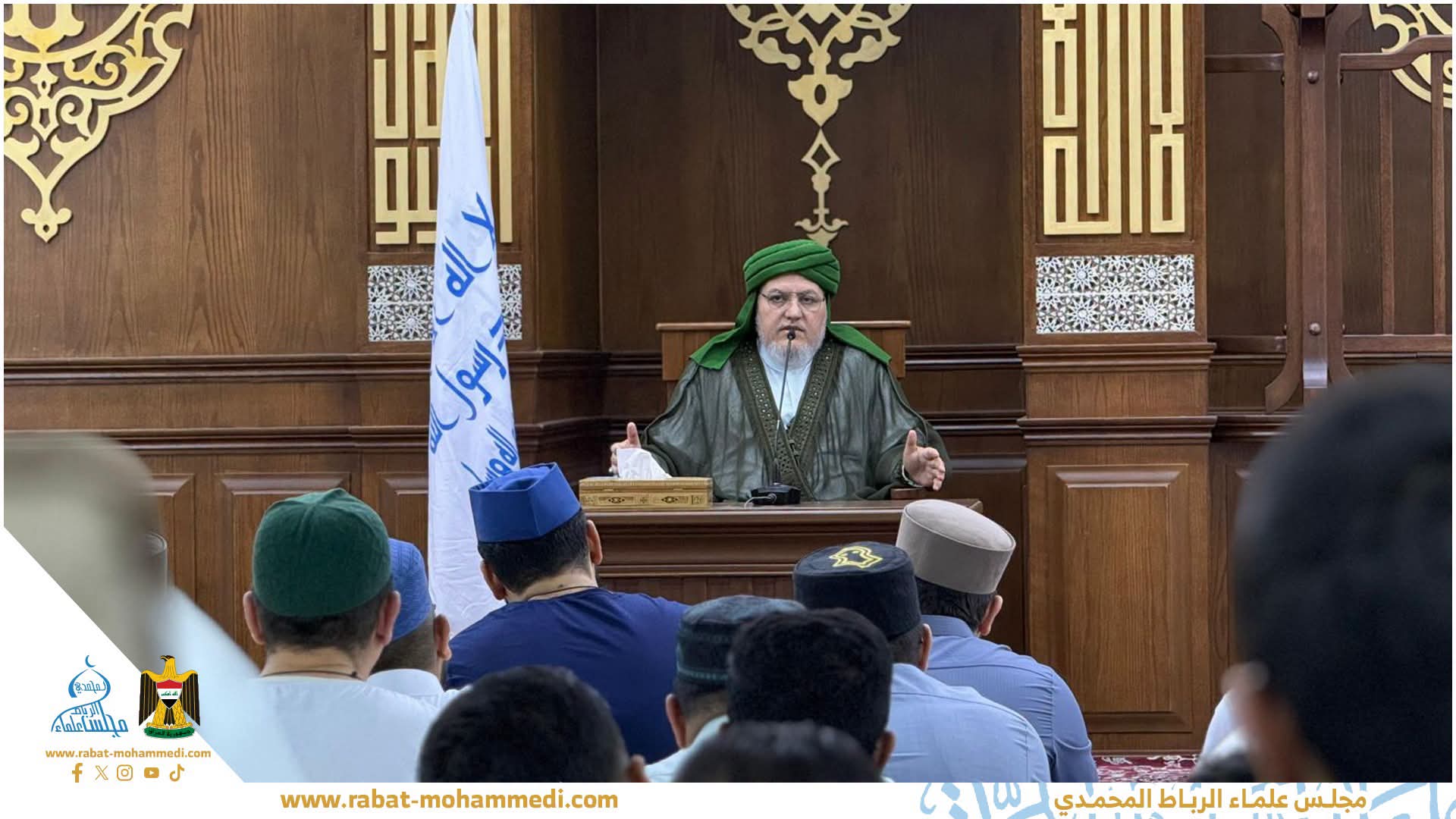
انعقد المجلس المحمدي في رحاب مسجد الالوسي في مدينة الفلوجة العراقية.وقد ابتدأ المجلس بمحاضرة السيد عبد القادر الحسني الالوسي رئيس مجلس علماء الرباط المحمدي حيث ابتدأ القول: في أجواء مفعمة بنفحات المولد النبوي الشريف؛ ثم سلّط الضوء على قضية محورية تمسّ واقع الفرد والأمة، وهي “تصحيح الوجهة وإدامة الصلة بالله ورسوله”.ولم تقتصر المحاضرة على التنظير الفكري، بل اتخذت من المنهج المعرفي والتربوي سبيلاً لربط النفوس بالخالق، مستشهداً بنصوص الشرع الشريف، ومستنيراً بتجارب العارفين وطبقات السالكين، لتقدم معالجة واقعية لحالة التشتت والضعف التي تعاني منها الأمة اليوم.أولاً: الأبعاد التربوية والفكرية للمحاضرة
- الاستثمار الإيماني للمناسبات والنفحات:
أكدت المحاضرة أن المناسبات الدينية (كالجمعة، ورمضان، والحج، والعيدين، والمولد النبوي) ليست مجرد محطات لتذكر التاريخ، بل هي “نفحات إلهية ومحطات ثابتة” وضعها الشارع لإدامة التوجه والتذكير بالغاية. مشيراً إلى الحديث النبوي: «إن لله في أيام دهركم نفحات، ألا فتعرضوا لها»، لتوضيح أهمية استغلال هذه المواسم في مراجعة الذات وتجديد العهد مع الله. - قاعدة حفظ التوجه (احفظ الله تجده تجاهك):
بيّنت المحاضرة أن غياب الحضور القلبي والانسياق التام وراء الأسباب المادية يُفقد الإنسان بوصلته. فحفظ التوجه إلى الله بالذكر والعمل الصالح يورث حالة إيمانية تجعل العبد يرى يد القدرة الإلهية حاطة به في كل شؤونه. - الوحدة والاجتماع في المولد النبوي:
طرحت المحاضرة رؤية عميقة لمفهوم الاحتفاء بالمولد النبوي الشريف؛ فبدلاً من جعله ساحة للخلافات والنزاعات الفقهية والتبديع، يُفترض أن يكون “جامعاً للكلمة وموحداً للقلوب” تحت راية محبة المصطفى صلى الله عليه واله وسلم، لتجاوز الهويات الضيقة والصراعات الطائفية والقومية.
ثانياً: صناعة الوعي في المنع والعطاء:
شَكّل استشهاد المحاضرة بحكايتين من تراث العارفين لُبّ التناول الفكري لتصحيح الوجهة، حيث جسّدت كل حكاية منهجاً تربوياً في التعامل مع أحوال الحياة (المنع والعطاء / البسط والقبض) - حكاية “الجنيد والشاكي”: الوعي في حال المنع والقبض
المضمون: دخل رجل مجلس “السري السقطي” ينوح ويبكي ظاناً أن منع الرزق عنه عقوبة إلهية، فكان جواب “أبي سعيد الخراز” إرشادياً بالصبر لتكفير الذنوب، بينما جاء جواب “الجنيد البغدادي” تصحيحاً معرفياً للوجهة؛ حيث أمره بالفرح لا البكاء، لأن المنع قد يكون صيانة إلهية لقلبه وحماية لسره من الالتفات للأسباب ونسيان المسبب.
وأثر الحكايةومغزاها:
تحويل نظر المسلم من ظواهر الابتلاءات والمنع إلى الحكمة الإلهية المخبأة فيها.
إسقاط هذا الفهم على حالة الضعف والابتلاء التي تمر بها الأمة: فالمنع يحتوي في طياته لطفاً يدعو للرجوع إلى الله وإصلاح الداخل. - حكاية “شقيق البلخي وإبراهيم بن أدهم”: الوعي في حال البسط والأسباب
المضمون: رأى “شقيق البلخي” طائراً أعمى في الصحراء يأتيه طعامُه عن طريق طائر آخر بصير، فقرر ترك تجارته وسفره متكلاً على أن الرزاق سيرزقه كما رزق الأعمى. وحين مرّ على العارف بالله “إبراهيم بن أدهم”، ذكّره الأخير ببوصلة التوجه قائلاً: «لماذا اخترت أن تكون الطائر الأعمى؟ لمَ لا تكون الطائر البصير الذي يطعم غيره؟».
الأثر والمغزى:
الفرق بين العجز والفاعلية؛ فالوجهة الصحيحة في الإسلام تعني العمل، والإنتاج، والأخذ بالأسباب للوصول إلى مرتبة “اليد العليا”.
التأكيد على أن الأسباب والمسبَّب كلاهما من خلق الله، والمؤمن القوي هو من يتجه لله بفعاليته وإيجابيته لا بسلبيته واتكاليته.
ثالثاً: التوصيات والنتائج - إعادة صياغة الخطاب الديني: التركيز على مقاصد العبادات والمناسبات في بناء الشخصية الإيجابية بدلاً من الخوض في الشكليات والمساجلات الفكرية.
- اعتماد منهجية “تصحيح النظر”: تربية أبناء الأمة على قراءة الأحداث المتغيرة (سواء على المستوى الشخصي أو على مستوى الأمة) بنظرة عميقة تجمع بين التوكل على الله والأخذ بالأسباب.
- جعْلُ المناسبات النبوية جسوراً للوحدة: استثمار ذكرى المولد النبوي الشريف كأداة لتجميع الأمة وتأكيد هويتها الجامعة وتجاوز حالات الانقسام.
خاتمة
إن المحاضرة المقامة في المجلس المحمدي قدّمت خريطة طريق روحية وعقلية، أثبتت من خلالها أن التوجه إلى الله المعبر عنه بقوله تعالى: {فَأَيْنَمَا تُوَلُّوا فَثَمَّ وَجْهُ اللَّهِ هو منهج حركة وعمل، يستحضر الحكمة في المنع، ويستنهض الهمة في العطاء.
Al-Muhammadi Council convened at Al-Alusi Mosque in Fallujah, Iraq.
The Council commenced with a lecture delivered by Al-Sayied Abdul-Qadir Al-Hasani Al-Alusi, Chairman of Al-Ribat Al-Muhammadi Scholars’ Council. He opened his speech in an atmosphere imbued with the spiritual breezes of the Prophet’s Mawlid (birth anniversary), subsequently shedding light on a pivotal issue impacting the present reality of both the individual and the Ummah: “Rectifying the Direction and Sustaining the Connection with Allah and His Messenger.”
Far from being confined to theoretical abstraction, the lecture employed an epistemological and educational methodology to connect souls with the Creator. Drawing evidence from holy scriptures and drawing inspiration from the experiences of gnostics and spiritual seekers, it offered a realistic remedy for the state of fragmentation and weakness currently confronting the Ummah.
First: Educational and Intellectual Dimensions of the Lecture.
- Spiritual Investment in Religious Seasons and Grace Period Blessings: The lecture emphasized that religious occasions (such as Friday prayers, Ramadan, Hajj, the two Eids, and the Prophet’s Mawlid) are not merely historical commemorations, but rather “divine breezes and fixed stations” established by the Lawgiver to maintain orientation and remind believers of their ultimate purpose. Citing the Hadith: “Indeed, during the days of your lifetime, your Lord has breezes of mercy; so expose yourselves to them,” the speaker highlighted the importance of capitalizing on these seasons for self-examination and renewing the covenant with Allah.
- The Principle of Preserving Orientation (“Mind Allah, and you will find Him in front of you”): The lecture demonstrated that the absence of spiritual presence and total indulgence in material causes leads individuals to lose their compass. Preserving one’s orientation toward Allah through remembrance and righteous deeds generates a state of faith enabling the believer to witness the Hand of Divine Power encompassing all their affairs.
- Unity and Convergence During the Prophet’s Mawlid (Birthday): The discourse articulated a profound vision regarding the celebration of the Prophet’s Mawlid. Rather than letting it become an arena for theological disputes, conflicts, and accusations of heresy (Tabdi’), it ought to serve as a unifying platform that gathers hearts under the banner of loving Al Mustafa ( Peacebeuponhimandhisfamily), thereby transcending narrow identities and sectarian or ethnic strife.
Second: Cultivating Awareness in Times of Deprivation and Provision
The speaker’s citation of two parables from gnostic heritage formed the core of the intellectual approach to rectifying one’s orientation, with each narrative embodying a developmental methodology for navigating life’s states (deprivation and provision / contraction and expansion).
- The story of “Al-Junayd and Al-Shakee”: Awareness During Deprivation and Contraction.
Content: A man entered the Council of Sari Al-Saqati, weeping and lamenting under the assumption that the withholding of his sustenance was a divine punishment. Abu Sa’id Al-Kharraz responded with pastoral guidance, counseling patience to expiate sins. In contrast, Al-Junayd Al-Baghdadi provided an epistemological rectification of orientation: he instructed the man to rejoice rather than weep, as divine withholding may represent a safeguard for his heart and a protection of his innermost soul from relying on secondary causes while forgetting the Originator.
Impact and Significance:
Shifting the Muslim’s perspective from the outward appearance of trials and deprivation to the inherent divine wisdom concealed within them.
Applying this insight to the Ummah’s current condition of weakness and affliction: divine withholding contains latent grace that calls for returning to Allah and reforming the inner self. - The story of “Shaqeeq Al-Balkhi and Ibrahim ibn Adham”: Awareness During Expansion and Secondary Causes.
Content: Shaqeeq Al-Balkhi observed a blind bird in the desert being fed by a sighted bird. Consequently, he resolved to abandon his trade and travels, relying on the provider to sustain him just as He had sustained the blind bird. When he encountered the gnostic Ibrahim ibn Adham, the latter re-calibrated his compass, asking: “Why did you choose to be the blind bird? Why not be the sighted bird that feeds others?”
Impact and Significance:
Illustrating the distinction between helplessness and proactive agency; a correct orientation in Islam entails work, productivity, and utilizing secondary causes to reach the status of “the upper hand.”
Reaffirming that both causes and the Cause-Giver are creations of Allah; a strong believer directs themselves toward Allah through proactivity and positivity, rather than passivity and dependency.
Third: Recommendations and Outcomes
- Reformulating Religious Discourse: Refocusing on the higher objectives (maqasid) of acts of worship and religious occasions to build a positive character, rather than entangling in superficialities and intellectual polemics.
- Adopting the “Rectification of Perspective” Methodology: Educating the youth of the Ummah to interpret changing circumstances—at both personal and collective levels—with a deep perspective that synthesizes trust in Allah (tawakkul) with the active pursuit of causes.
- Making Prophetic Occasions as Bridges for Unity: Leveraging the memory of the Prophet’s Mawlid as an instrument to unify the Ummah, reinforce its collective identity, and transcend states of division.
Conclusion:
The lecture held at Al-Muhammadi Council delivered a spiritual and intellectual roadmap. It established that turning toward Allah—as expressed in the Quranic verse: “Wheresover you turn, there is the Face of Allah”—constitutes a methodology of action and movement that invokes wisdom during hardship and rouses resolve during ease.